
The short answer: agents stop forgetting when the work stops living in one conversation
AI agents do not usually fail because they know too little. They fail because long work degrades inside a single context window.
A model can begin a code review, market analysis, legal document check, or migration plan with impressive focus. Then the task grows. Requirements accumulate. Earlier constraints become faint. The agent starts skipping details, repeating itself, or declaring completion before the work is actually complete.
Larger context windows help, but they do not solve the architectural problem. If the entire plan, execution, validation, and summary all sit inside one continuous conversation, the system is still asking one cognitive process to behave like a project team.
Dynamic Workflows in tools such as Claude Code point to a better pattern: the model writes or uses orchestration logic that breaks the job into smaller assignments, runs specialized agents with clean context, and then consolidates the outputs through a separate synthesis step.
The real breakthrough is not that one agent becomes smarter. It is that the workflow becomes less dependent on one agent remembering everything.
This is a meaningful shift for enterprise AI. It moves us from prompt-based assistance toward AI process engineering.
Why the single-agent pattern breaks under real work
A single agent is useful for focused tasks: rewrite a function, summarize a meeting, draft a customer email, compare two short policies. The problem starts when the task has breadth, ambiguity, and risk.
Consider a code review across a large repository. One agent may need to inspect authentication, data validation, error handling, business logic, documentation, performance, and dependency risk. Even if the model is strong, it is operating under competing pressures:
- It must remember the original instruction.
- It must explore a large search space.
- It must decide what matters.
- It must avoid false positives.
- It must produce a coherent final report.
- It must know when it is truly done.
That is not a simple chat interaction. That is a workflow.
When organizations treat this as a prompt-writing problem, they usually get inconsistent results. Sometimes the agent is brilliant. Sometimes it is confidently incomplete. In production, that variance matters more than the demo.
AI implementation is not a purely technical activity. It requires domain knowledge, operational judgment, management discipline, and a serious understanding of the limits of probabilistic systems. This is exactly where superficial AI advice becomes dangerous, especially for small and mid-sized companies that may not have the internal filters large enterprises usually develop.
What dynamic agent workflows actually change
Dynamic agent workflows change the unit of work.
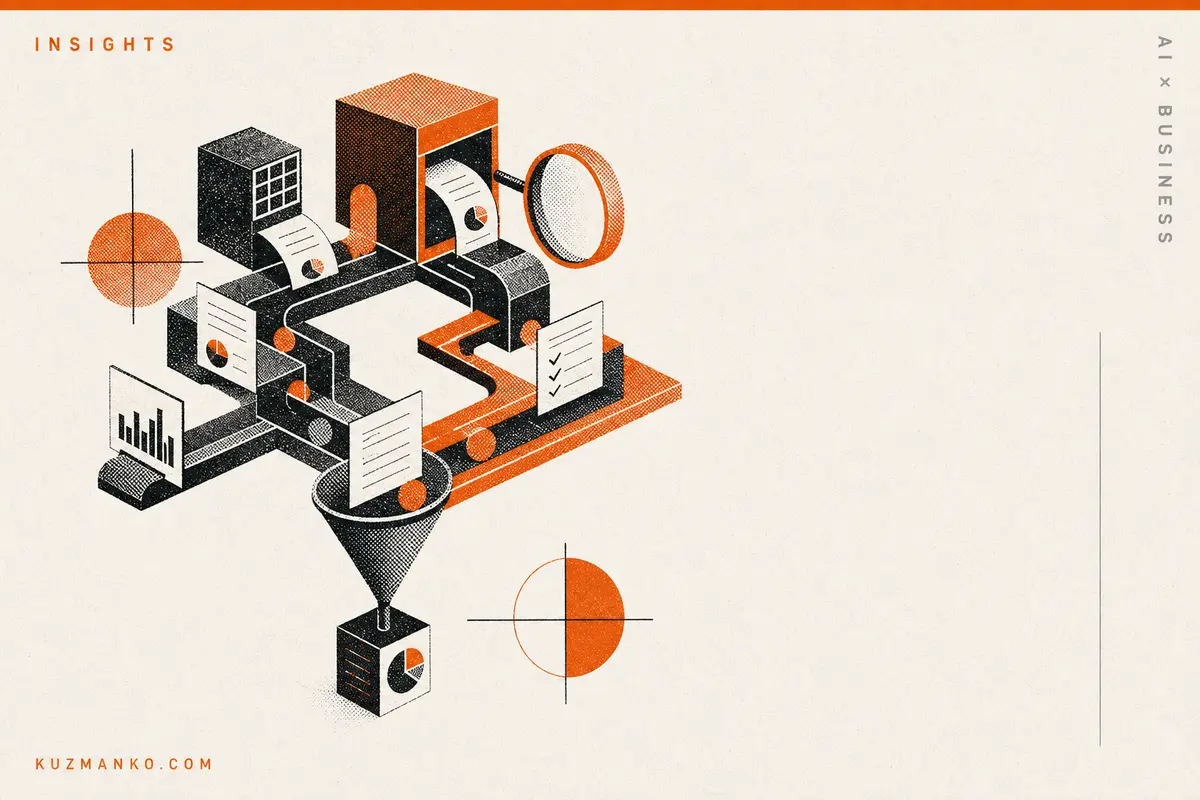
Instead of one model doing everything, the system creates a small operating structure. One agent may plan. Several agents may investigate different areas. Other agents may challenge the findings. A final agent may synthesize the result. In Claude Code, this can involve generating lightweight orchestration code, often in JavaScript, to coordinate calls and preserve the plan outside the conversation itself.
A simplified pattern looks like this:
const findings = await runAgents([
  { role: 'security-reviewer', scope: 'authentication and authorization' },
  { role: 'logic-reviewer', scope: 'business rules and edge cases' },
  { role: 'data-reviewer', scope: 'validation, schema, and integrity' },
  { role: 'documentation-reviewer', scope: 'developer and user-facing documentation' }
]);

const challengedFindings = await runAgents([
  { role: 'skeptic', task: 'try to disprove each finding', input: findings },
  { role: 'risk-ranker', task: 'rank surviving issues by operational impact', input: findings }
]);

const finalReport = await synthesize({
  evidence: challengedFindings,
  requiredConfidence: 'high',
  output: 'executive and engineering summary'
});
The code is not the main point. The architecture is.
The workflow externalizes structure. It reduces context pollution. It gives each agent a narrower mandate. It creates a mechanism for opposition, not just generation. That matters because many enterprise problems require the system to ask: what if my answer is wrong?
The enterprise value: reliability before speed
Most executives first encounter AI through speed. Draft faster. Analyze faster. Build faster. But in operational settings, speed without reliability can create hidden cost.
A code agent that identifies 50 vulnerabilities but includes 20 weak claims may slow the engineering team. A procurement agent that summarizes suppliers but misses a contractual constraint can create financial exposure. A legal review agent that sounds convincing while overlooking a jurisdiction-specific clause can become a governance problem.
The advantage of multi-agent workflows is not just parallelism. It is controlled friction.
In sensitive workflows, organizations should design agents that disagree with each other on purpose. One agent finds issues. Another tries to refute them. A third checks whether the evidence supports the conclusion. Only findings that survive challenge should reach the human reviewer.
This is useful in areas such as:
- Security reviews.
- Quality assurance.
- Legal and compliance analysis.
- Financial controls.
- Market and competitive intelligence.
- Large-scale migration planning.
- Business process redesign.
- Customer support escalation analysis.
A mature AI workflow should not merely answer. It should demonstrate how it reached the answer, what evidence it used, what it rejected, and where human judgment is still required.
Human in the loop, but not human on every click
Human-in-the-loop remains one of the most important principles in enterprise AI. But it is often implemented in a way that destroys the business case.
If every AI action requires a human to inspect every detail, the organization has not transformed the process. It has added another queue.
The better question is this: how can a person who previously supervised one process now supervise hundreds of AI-supported processes with better control and higher throughput?
That requires a different operating model:
- Humans approve policies, thresholds, and escalation rules.
- Agents execute bounded tasks.
- Verification agents challenge outputs before escalation.
- Humans review exceptions, high-risk decisions, and low-confidence results.
- Audit trails record what was checked, by whom, and on what evidence.
This is where AI creates real operational efficiency. It does not remove human judgment. It reallocates it to the points where judgment has the highest value.
Not every task deserves a workflow
There is a temptation to turn every AI task into a team of agents. That is a mistake.
Every agent call consumes tokens. Every validation step adds latency. Every split introduces coordination cost. A multi-agent workflow can easily consume millions of tokens on a large code review or research task. Sometimes that cost is justified. Sometimes it is theatrical engineering.
Dynamic workflows are best suited for tasks with breadth, separable workstreams, and meaningful risk. They are less useful for narrow tasks that require a single deep chain of reasoning where each step depends heavily on the previous one.
A practical decision rule:
- Use a single agent for narrow, low-risk, sequential tasks.
- Use multiple agents for broad, parallelizable tasks with independent dimensions.
- Add adversarial review when false positives or false negatives are expensive.
- Add human review when the decision has legal, financial, operational, or reputational impact.
- Avoid agent orchestration when the workflow is more expensive than the problem.
The goal is not to maximize agent count. The goal is to maximize trustworthy output per dollar, per minute, and per unit of management attention.
The economics: cheaper models are not always cheaper workflows
Many organizations evaluate AI cost by token price. That is too simplistic.
A smaller model can be cheaper per token and still more expensive per completed task if it needs more attempts, more correction, more validation, or more human review. A stronger model can be more expensive per call but cheaper in the final accounting because it reaches a useful result faster and with fewer defects.
A sensible pattern is to match model strength to responsibility:
- Use stronger models for planning, orchestration, synthesis, and high-risk judgment.
- Use lighter models for narrow extraction, classification, or repetitive checks.
- Use verification agents where the cost of error is material.
- Track cost per accepted output, not cost per token.
- Measure human review time as part of the AI cost model.
This is one reason Claude Code is currently one of the more practical tools for applied AI work. Anthropic has been moving quickly, and its product direction shows a strong understanding of how professionals actually build, inspect, and coordinate work. OpenAI still offers strong and diverse foundation models, and Microsoft Copilot continues to improve, particularly inside the Microsoft ecosystem. But Claude's recent momentum around coding, agentic work, and workflow interaction is hard to ignore.
That said, enterprise adoption cannot ignore security. Claude can be an excellent environment for broad organizational AI usage, but information security, data governance, access control, and vendor risk must be handled seriously from day one.
The platform question: enterprises need agent infrastructure
The next stage of enterprise AI is not only about choosing a model. It is about building the organizational capacity to create, manage, monitor, and retire agents.
Microsoft Copilot Studio is a reasonable option for organizations deeply invested in the Microsoft ecosystem. At the same time, tools such as n8n are entering environments that previously would have dismissed them as too lightweight for large companies. The market is changing because business teams need faster orchestration, and IT teams need governance without becoming a bottleneck.
This creates a new responsibility for information systems departments. Over time, IT will become a kind of human resources function for AI agents.
They will need to know:
- Which agents exist.
- Who owns each agent.
- What permissions each agent has.
- What data each agent can access.
- Which processes each agent affects.
- How agent performance is measured.
- When an agent should be updated, restricted, or retired.
This is not science fiction. It is the natural consequence of giving non-deterministic systems partial responsibility for operational work.
Literacy and agents must advance together
Organizations should pursue two tracks at the same time.
The first is AI literacy. Employees need to learn how to communicate effectively with models, assess outputs, structure requests, and understand limitations. This is a core professional skill now, not a novelty.
The second is agent development. Companies need internal capability to build and manage agents that perform real work inside controlled processes.
These tracks are different. AI tools often require employees to change their daily habits. That can be harder than it looks. Agent workflows, by contrast, can sometimes improve operations without asking every employee to become an expert prompt engineer. The employee continues to work through familiar systems while agents operate behind the scenes.
The best strategy is not literacy or agents. It is literacy and agents.
The uncomfortable truth about expertise
AI is multidisciplinary. It sits at the intersection of computer science, statistics, operations, management, domain expertise, risk, and organizational behavior. Academic knowledge matters. Practical business experience matters. Implementation experience matters.
This is why organizations should be careful with self-appointed AI experts who sell confidence without depth. Large enterprises often have enough internal maturity to filter weak advice. Smaller and mid-sized companies are more exposed. Bad AI consulting does not merely waste budget. It can create unstable processes, weak governance, and misplaced trust in systems that are not ready for the responsibility they are given.
A serious AI program should involve people who understand both the technology and the business process. The strongest work often comes from hybrid thinkers: people who can connect professional workflows with AI implementation rather than treating AI as a technical plug-in.
The managerial lesson
Dynamic Workflows in Claude Code are not just a feature for developers. They represent a broader management principle: AI systems become more useful when work is decomposed, roles are explicit, evidence is required, and verification is designed into the process.
For CTOs, CFOs, COOs, and business leaders, the question is no longer whether an AI agent can complete a task. The better questions are:
- Should this task be handled by one agent or a coordinated workflow?
- What evidence must be produced before the result is trusted?
- Which errors are acceptable, and which are not?
- Where should human judgment enter the process?
- How will cost be measured at the workflow level?
- Who owns the agent after it goes live?
The future of enterprise AI will not be won by organizations that deploy the most agents. It will be won by organizations that design the best operating systems for agents.
Agents stop forgetting when the plan leaves the fragile memory of a single chat and becomes part of a managed workflow. They start working as a team when the organization gives them roles, boundaries, review mechanisms, and accountable ownership.
That is where the real productivity gains begin.