
The short answer
Yes, we may be getting closer to a world where organizations no longer need to retrain an AI agent from scratch every time a process changes interface, tool, or context. The more important question is whether the agent can be taught, inspected, governed, and reused without turning every automation project into a custom engineering exercise.
That is why Syll is worth paying attention to.
Syll, an open-source, self-hosted multi-agent framework described in recent academic work, tackles one of the most frustrating gaps in enterprise automation: agents that work well in one interface but fail when the real workflow moves between an API, a terminal, and a graphical desktop application.
The strategic shift is not from manual work to automation. It is from one-off automation to an organizational skill library that compounds over time.
Why current agents break in real business environments
Most enterprise processes are not clean. They are not fully API-based, not fully documented, and not neatly contained inside one SaaS platform.
A finance analyst may export data from a legacy system, clean it in a spreadsheet, validate it against a browser-based dashboard, and upload a file through a portal that has no API. A designer may move between Photoshop, a file system, a web-based asset manager, and a command-line compression tool. A QA team may need to compare visual output, logs, and application states.
Traditional automation struggles here because it tends to be tied to one of three worlds:
- API automation, which is powerful but only where APIs exist and are stable.
- CLI automation, which is efficient for technical workflows but inaccessible to many business teams.
- GUI automation, which can mirror human work but often becomes brittle and hard to audit.
AI agents promised to bridge this gap, but many still behave like talented interns with short memories. They can perform impressive tasks, yet they often lack a durable, reviewable way to convert a demonstrated routine into a reusable organizational capability.
For enterprises, this is not a small technical inconvenience. It is a governance problem, a reliability problem, and eventually a financial problem.
What Syll changes
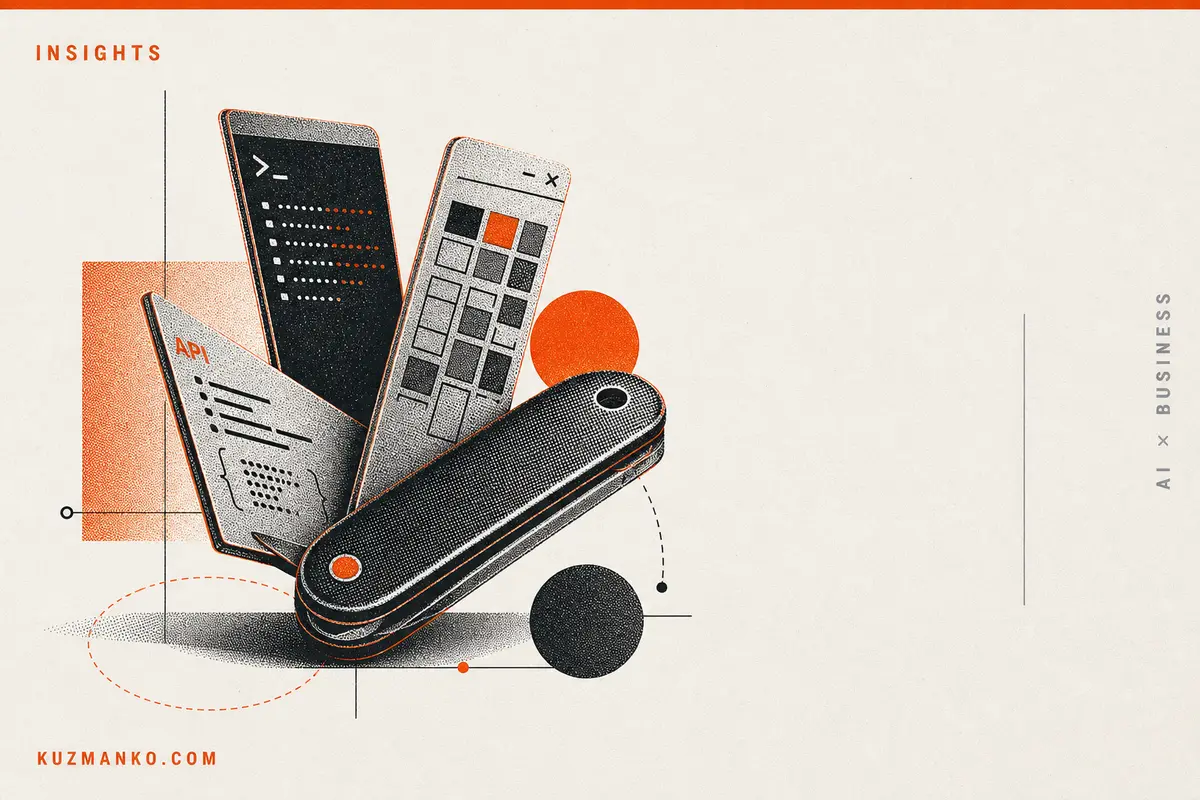
Syll introduces a more practical pattern: the user demonstrates a procedure, and the system converts that demonstration into a reusable skill. The agent can then execute across three action channels: MCP/API, CLI, and visual GUI.
The important part is not only the multi-interface execution. It is the two-way interaction model.
The human does not merely write a prompt and hope the agent understands the business process. The human shows the process. Syll records and structures it. When the agent acts later, it produces evidence such as logs, screenshots, checkpoints, and intermediate artifacts that humans can inspect.
That design matters because enterprise AI does not fail only when the model is weak. It often fails when the implementation ignores how organizations actually manage risk.
A good agentic system needs:
- A clear way to teach procedures.
- A durable memory of reusable skills.
- Evidence for what happened during execution.
- Approval checkpoints where judgment is required.
- Editable artifacts that process owners can improve over time.
- A deployment model that can satisfy security, privacy, and compliance teams.
Syll does not magically solve every enterprise AI challenge. But it points toward the right architecture.
Demonstration beats prompting for many operational workflows
Prompting is useful, but it is not a process management discipline.
In knowledge work, we often assume that if someone can describe a task in natural language, an agent should be able to execute it. That assumption is weak. Many business processes contain tacit knowledge: where to click, which exception matters, what the correct output should look like, when to stop, and what should never be changed.
A demonstrated workflow captures more than instructions. It captures sequence, context, interface behavior, and decision boundaries.
This is especially relevant for non-deterministic processes, where AI can replace or support work that previously required human judgment. But the human-in-the-loop principle must be applied intelligently.
If every agent action requires a human approval, the organization has not automated the process. It has only added a new layer of bureaucracy. The goal is different: one person who previously executed a single process should be able to supervise dozens or hundreds of agentic executions with the right alerts, checkpoints, and exception handling.
That is the real productivity gain.
The enterprise value: skill libraries, not isolated bots
The strongest business case for a framework like Syll is the creation of an internal automation library that grows with the organization.
Instead of treating every workflow as a separate automation project, companies can start building reusable skills:
- Prepare this visual asset for publication.
- Compare these reports and flag anomalies.
- Convert this folder structure into a client delivery package.
- Run a QA scenario and capture evidence.
- Extract data from a system with no reliable API.
- Reproduce a desktop workflow that only a senior employee knows today.
Over time, the organization accumulates operational memory. That memory is not locked inside one employee, one vendor, or one fragile script.
This has direct financial implications. The return on AI investments improves when every new automation does not start from zero. The cost of process discovery decreases. The cost of handover decreases. The cost of maintaining tribal knowledge decreases.
For CFOs, the relevant metric is not how many agents were launched. It is how many repeatable processes became cheaper, faster, safer, and easier to supervise.
Self-hosted and open-source is not a detail
Syll being open-source and self-hosted is particularly meaningful for regulated sectors: financial services, healthcare, defense, industrial operations, and companies handling sensitive intellectual property.
Many enterprises want agentic automation but cannot send screenshots, documents, workflows, or user actions to an external cloud service without serious review. A self-hosted architecture can reduce adoption friction because it gives security teams more control over deployment, logging, access, and data retention.
This does not remove the need for security work. In some cases, it increases the responsibility on internal teams. But it changes the conversation from whether the organization can use the tool at all to how it should be governed.
A reasonable internal deployment model may look like this:
agent-platform:
  hosting: private environment
  interfaces: API, CLI, GUI
  skill-storage: local editable artifacts
  approval-model: risk-based checkpoints
  audit: logs and screenshots
  ownership: IT plus business process owners
The technical architecture is only one part of the equation. The organization also needs operating discipline.
AI agents require business expertise, not only technical enthusiasm
This is where many AI initiatives go wrong.
There are many self-declared AI experts who can produce impressive demos. Demos are not operating models. A production-grade agent requires a mix of AI knowledge, process understanding, business experience, governance, change management, and measurable operational design.
AI is multidisciplinary by nature. The best implementations often come from teams that understand both the professional domain and the capabilities of the models. Academic research matters here, not as decoration, but because it creates structured thinking around reliability, evaluation, interaction design, and system architecture.
An agent that automates a financial process without understanding financial controls is dangerous. An agent that modifies creative assets without understanding approval chains is disruptive. An agent that operates in healthcare without process governance is unacceptable.
The lesson is simple: agentic AI is not just a technical installation. It is an organizational capability.
Where Syll fits alongside Copilot, Claude, and automation platforms
Syll should not be viewed as a replacement for every enterprise AI tool. It belongs in a broader portfolio.
Organizations should advance on two parallel tracks:
- AI literacy, so employees learn how to communicate effectively with models and use AI tools responsibly.
- Agent development, so the organization builds internal capacity to create, deploy, supervise, and improve AI agents.
Microsoft Copilot remains a useful infrastructure layer, especially for companies deeply invested in the Microsoft ecosystem. Copilot Studio can be a reasonable route for agents that live inside Microsoft systems, and its pace of improvement has increased. Claude, especially in practical development contexts such as Claude Code and collaborative work scenarios, is currently one of the more effective AI systems for real implementation, though enterprises must address security and data governance carefully.
At the same time, tools such as n8n are entering larger organizations more seriously than many expected. What once looked like lightweight automation for smaller teams is increasingly becoming part of enterprise automation discussions.
Syll sits in an interesting place because it focuses on a hard problem that many platforms still handle unevenly: teaching and reusing skills across mixed interfaces.
What CIOs and operations leaders should do next
Syll is not something every company should immediately deploy in production. But every serious enterprise AI leader should study the pattern it represents.
A practical evaluation should include:
- Identify workflows that cross API, CLI, and GUI boundaries.
- Prioritize tasks with high repetition and moderate judgment requirements.
- Test whether demonstrations can be converted into reliable reusable skills.
- Define which steps require human approval and which can run autonomously.
- Measure time saved, error reduction, and supervision capacity.
- Involve security, legal, and compliance teams early.
- Assign ownership to both IT and the relevant business process owner.
This last point is critical. IT departments will increasingly become something like human resources departments for AI agents. They will not only manage systems. They will onboard agents, assign permissions, monitor performance, retire unsafe skills, and ensure that agent behavior matches organizational policy.
The bigger signal
Syll is part of a broader movement away from prompt-only AI and toward managed agentic infrastructure. That is the right direction.
The organizations that benefit most from AI will not be the ones that buy the most tools. They will be the ones that learn how to turn business knowledge into governed, reusable, inspectable machine-executable routines.
Teaching an agent once and reusing that knowledge many times sounds simple. In practice, it requires architecture, governance, domain expertise, and a mature view of human supervision.
But if this pattern matures, the economics of enterprise automation change. Companies will stop asking, “Can AI do this task?” and start asking a more valuable question: “Can this process become part of our reusable operational intelligence?”
That is where the real advantage begins.